Showing posts with label harvest season. Show all posts

Friday, September 6, 2013

More Reaping What We've Sown

Following my last post, on the fruits of our farmyard labor, is the conclusion of that same subject.

PART III: THE ANIMALS

Last spring we bought two pigs, Gloucester old spots which Henry jokingly referred to as Crack and Ling. We explained to our boys at the outset that these animals were for eating, a fact which they seemed oddly unphased by. We never treated them as pets, and when the time came for one of them to go "to market", there were no tears. However a few weeks ago when we had pork chops for supper, Michael met the news that the meat came from our own pig with a very grown up "You're kidding, right?" But he ate it right up.

The meat tasted amazing, and was eaten with more thoughtfulness and appreciation than I typically tend to give my food. I thought about the good life our pig enjoyed; the open, sunny (sometimes) space, the daily food scraps from our table supplemented with organic feed, and the fresh country air. I thought about what she contributed to us not just in terms of bacon, but how she composted our scraps and fertilized our field to prepare it for planting potatoes next spring. I am a little late to the party in finally reading Michael Pollen's excellent book "The Omnivore's Dilemma", but he describes it this way:
In fact, when animals live on farms the very idea of waste ceases to exist; what you have instead is a closed ecological loop-what in retrospect you might call a solution.

The Lambs:

Some of you may remember that back in March I adopted two lambs. Unlike the pigs, these two were treated like babies, bottle fed, cuddled and coddled and given names. Though right now they are about ready to eat, I just can't quite surrender them to the butcher, and neither can my boys. Johnny and Violet will remain pets, but they will earn their keep with annual wool contributions. And sheep, like all ruminants (animals whose amazing stomachs can convert plant matter to protein), are also really great at burying seeds into the ground with their hooves, fertilizing the ground with their, well, fertilizer, and generally keeping our field in great shape.

The fleece in the photo above were given to me by our friend and neighbor Kitty, who has about eighty of her own sheep. Though she sells her wool, she kindly set aside a few fleece for me when she heard that I was interested in learning how to spin it. (I still haven't taken my wheel out of the box, but its high up on my to do list.)

The Chickens:


The chickens have been a mixed bag. I mean, thank you sooo much for all those eggs, ladies. Seriously, I appreciate them. But my chickens are seriously aloof. I was hoping for the kind of chickens I could pick up and stroke, chickens who would run to rather than from me when I came outside. These are not those. Then there is rooster. I'm not a fan.(Though I did find it hysterical when he went through a brief period wherein he tried to attack Henry, and I don't particularly mind all the cock-a-doodle-dooing.) But we wanted chicks. I wanted my kids to see the miracle of the baby birds breaking through the eggs, and for them to be able to hold the sweet fluffy little things in their hands. But when one hen finally went broody, she decided to go rogue and sit on her eggs out in the field somewhere. (What? My chicken house not good enough for you?) She was eaten by a fox. But then a second hen went broody on a huge clutch of eight or nine eggs, hatched a mere two of them the day we went to France for summer vacation, and managed to have two cockerels. Thanks, lady.

Tomorrow we're going to the Moreton Show, which is a huge agricultural fair. Stay tuned for a post on some new chickens. And perhaps a recipe for chicken soup.

PART IV: THE EARTH
Still with me?
Okay, the garden. I'll keep this bit brief.
Before:

After:

We ate all of those carrots in pretty short order, but we have a bumper crop of beets and more lettuce than we could eat. We juiced some of our kale, which was pretty tough and fiber-y, and had some delicious green beans. We missed out on most of our purple broccoli because we went to France as it was ready to eat, so we gave it to Tom who helps us with the gardening on Saturdays.

We're still a long way from total self sufficiency here, but we're taking steps in that direction. Maybe we'll never get there completely, but that's okay. We're enjoying our efforts all the same.

Wednesday, September 4, 2013

Reaping What We've Sown

It's been just over a year since my family moved from Brooklyn to England, which, although that can't possibly be right, is true. Also hard to fathom right now is the fact that summer is effectively over, but the facts support that claim, too.  (For instance, the kids are back in school today, hence the reason I have time to write this post.)
What follows is a roundup of what we've harvested this summer from the insects, animals and earth around us. We can't really take credit for most of it. The bumper crop of honey we harvested (see jars above) is obviously all down to those hardworking bees. The raw fleece, which I hope to both spin into yarn as well as make some felt from, is simply the byproduct of some sheep shearing. Even the vegetables from our garden, though we watered and weeded it, are a credit to forces way larger than any of my people. But we're taking up all of these gifts with as much gratitude as possible (all of my boys yesterday, unprompted by me I swear, said "Thank you, bees!" before digging into their chunks of oozing honeycomb after lunch).

Today I'll post about two of the four contributors to our harvest; the bees and the flowers. My next post will cover the animals and the earth.

PART I: THE BEES

Henry has proven to be a natural at beekeeping, and his three hives have flourished in this first year. Charlie learned about bees at school last year and has been keen ever since, so he has his own suit and is Henry's very able bodied assistant.
Charlie especially loves smoking the bees. It chillaxes them before we take out the frames to extract the honey.
Those frames are heeeaaavy. Underneath all of those beautiful waxy combs is liquid gold.
Henry demonstrates how a pro slices off the top layer of comb before putting the frames into...
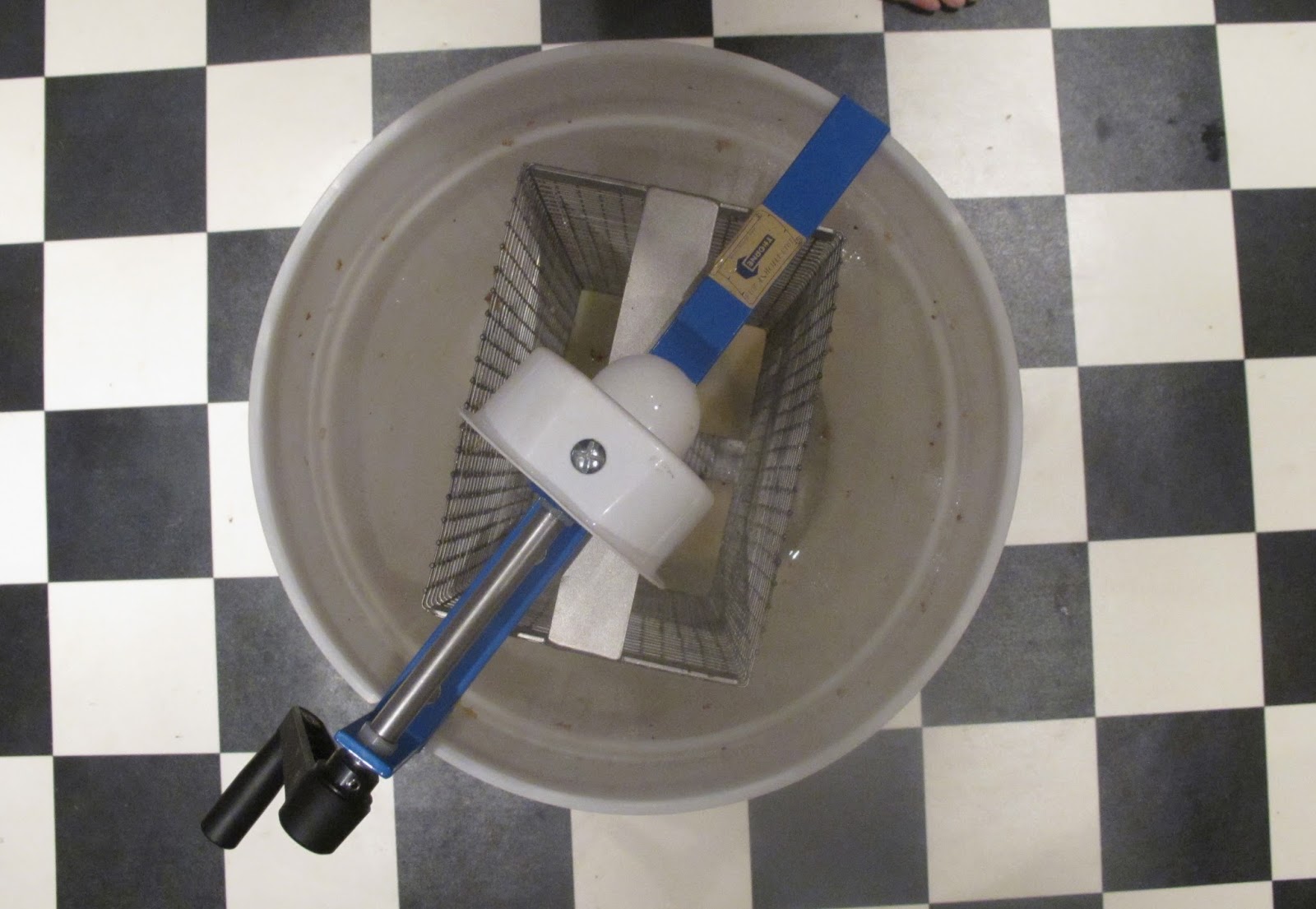
...the extractor bucket. A frame of honey gets stuck into either side of the metal cage. Turning a handle whizzes them around to get the honey out of the comb. Super high tech, very effective.
The extractor bucket has a spout at the bottom so you can pour your honey into jars. This batch is mostly made from oilseed rape blossom, which grow profusely on the farm and look like this:
In late spring the countryside is covered in beautiful swaths of these gold flowers. The seeds are harvested in the fall and pressed into cooking oil. This kind of honey eventually crystallizes and sets into hard white honey. Jake totally turns his nose up at grocery store honey now.

PART II: THE FLOWERS

I'm crap at identifying local flora and fauna, but in June I started picking up on the unmistakable scent of chamomile during my runs. I saw all these daisies out in the field, and on closer inspection found out that they were chamomile (which are a type of daisy). The boys helped me harvest a bunch of it, which I dried and put into jars. I don't love chamomile tea to be honest, but I might use it in bath salts or soap making.


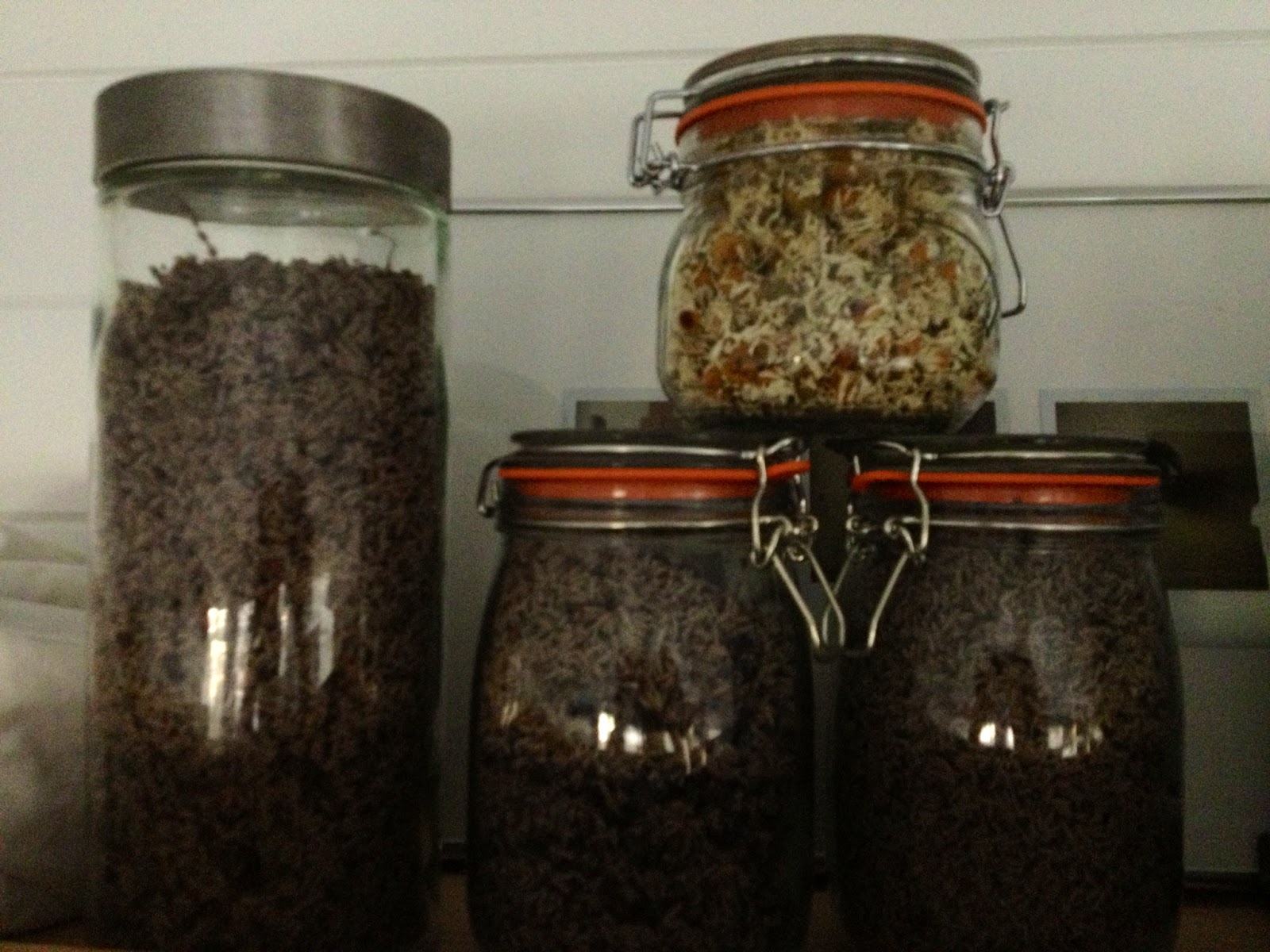
Although I did gather some lavender from home, I have to confess that most of my supply this year was gathered in France, where our friends Dave and Rachel have a house lousy with lavender. We collected a LOT of it, and spent an afternoon around the table stripping the flowers from the stems. We carried it around in a pillowcase in the car as we cruised around France for several weeks. Now most of it is in jars in my studio. 


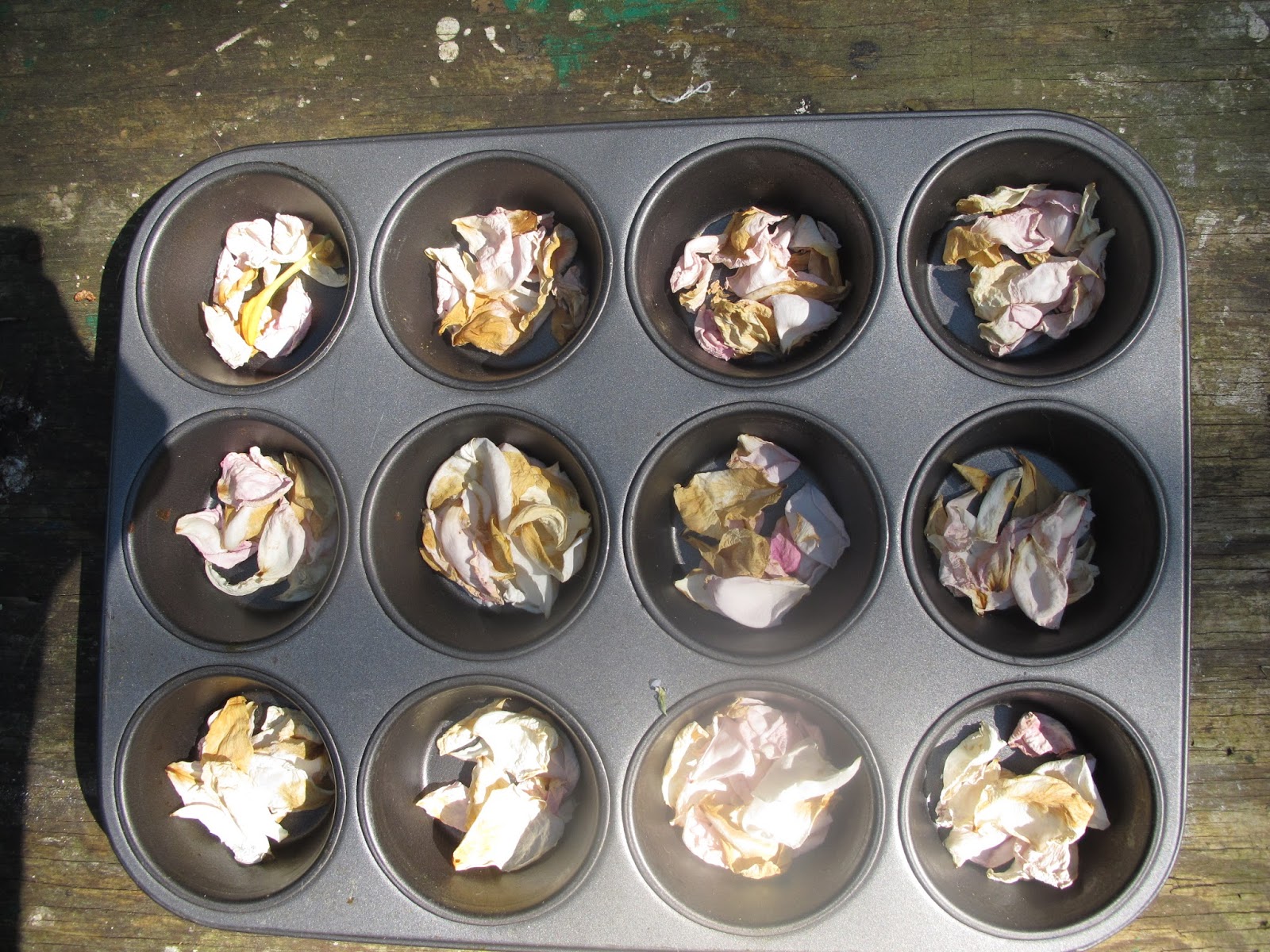
I managed to gather a few rose petals also, which are from my mother in law's garden down the road. Because I don't know much about flowers and plants I stuck to gathering the basics this year. One of my goals for the coming year is to learn a lot more about local and native plants and herbs. My great grandmother knew all about edible and medicinal plants around her native Kentucky, and I want to do the same here. I'll let you know how that goes.


Thursday, October 4, 2012

A Day at the Fair


This post is a little dated, but I wanted to include it because it gives a good sense of the sort of thing we spent our time doing shortly after we got to England. A few weeks after we arrived, in August, the harvest was in full swing. (We live smack in the middle of England's agricultural green belt.) Combines, harrows and balers were whizzing by our cottage at all hours. Grain was being harvested and hay was being packed into those lovely rectangles and rolls that now dot the ploughed landscape.

At the same time, little posters were popping up all over the road sides advertising the local village fetes. We visited several of them-some tiny, like the one in our own village which lasted only a few hours, others enormous, lasting the entire day and attracting visting crowds of thousands. But like all good country fairs, they each celebrated the pride of local life, from parades of prize farm animals to cooking contests (preserves, pies, etc.) to demonstrations by local crafts and guilds. The latter, of course, captured my interest most.

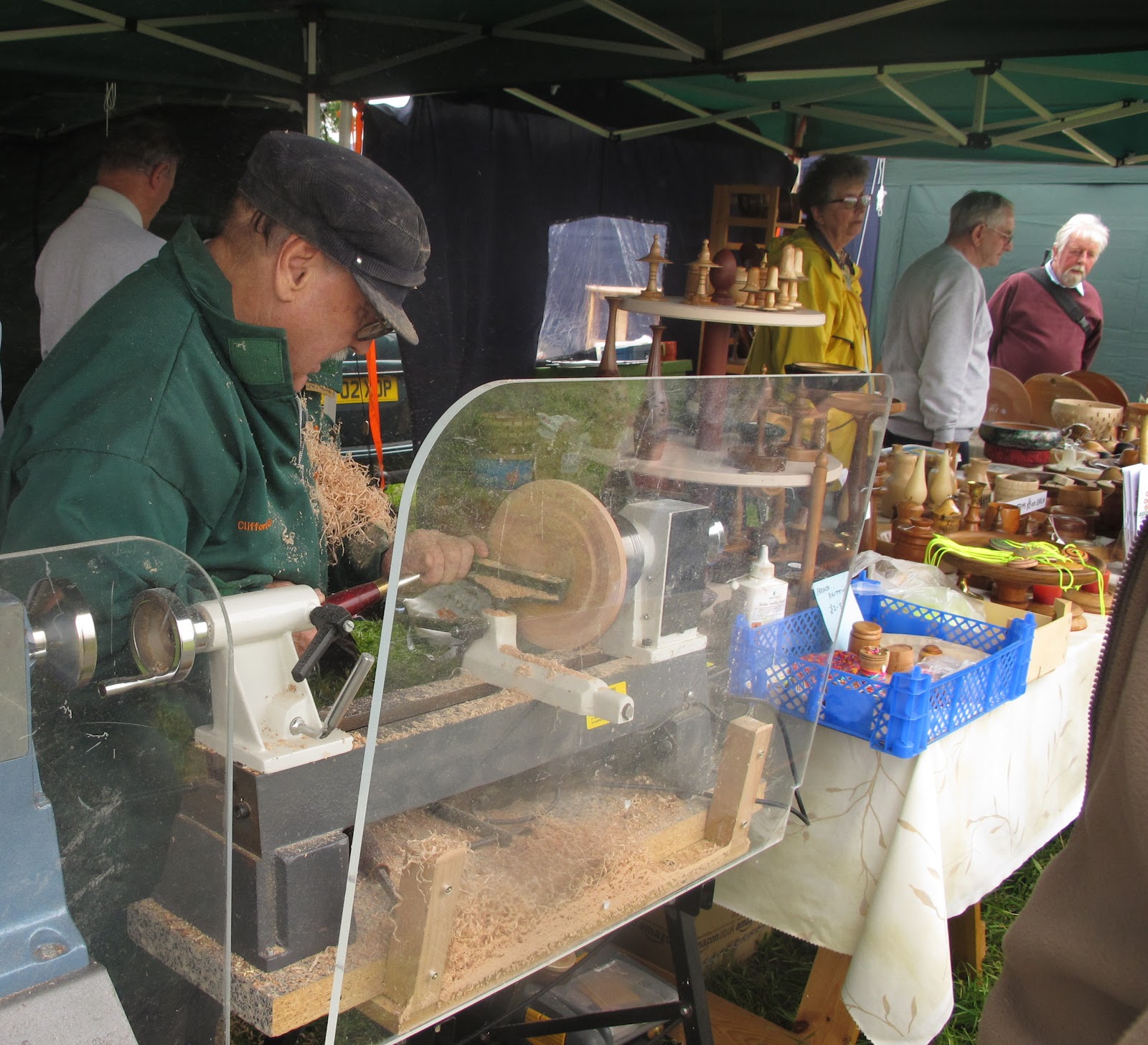
Below are some photos from the Wychwood Fair, where we had a go a shooting with the  local archery club, caught a ferret race (run by a ferret rescue organization, eww), watched woodturning demonstrations, chatted with the Oxfordshire Beekeepers about queenspotting, and saw some local wool being spun and woven. This wasn't the biggest (or the smallest) of the fairs we went to, but it embodied the spirit of the village fete completely.